Most people planning Reykjavik tours start with the wrong question: which company, rather than which season. The answer changes everything else, from what a tour costs to whether the northern lights are even possible on the nights available. This page settles the order to decide things in: season first, transport from the airport second, then the specific tours worth paying for. It leaves the day-by-day itinerary work, the aurora-only tours and the full multi-day packages to their own pages, linked below where they belong. What follows is built from published figures rather than from what a listing promises, because a listing has every reason to say the trip works whatever week it happens.
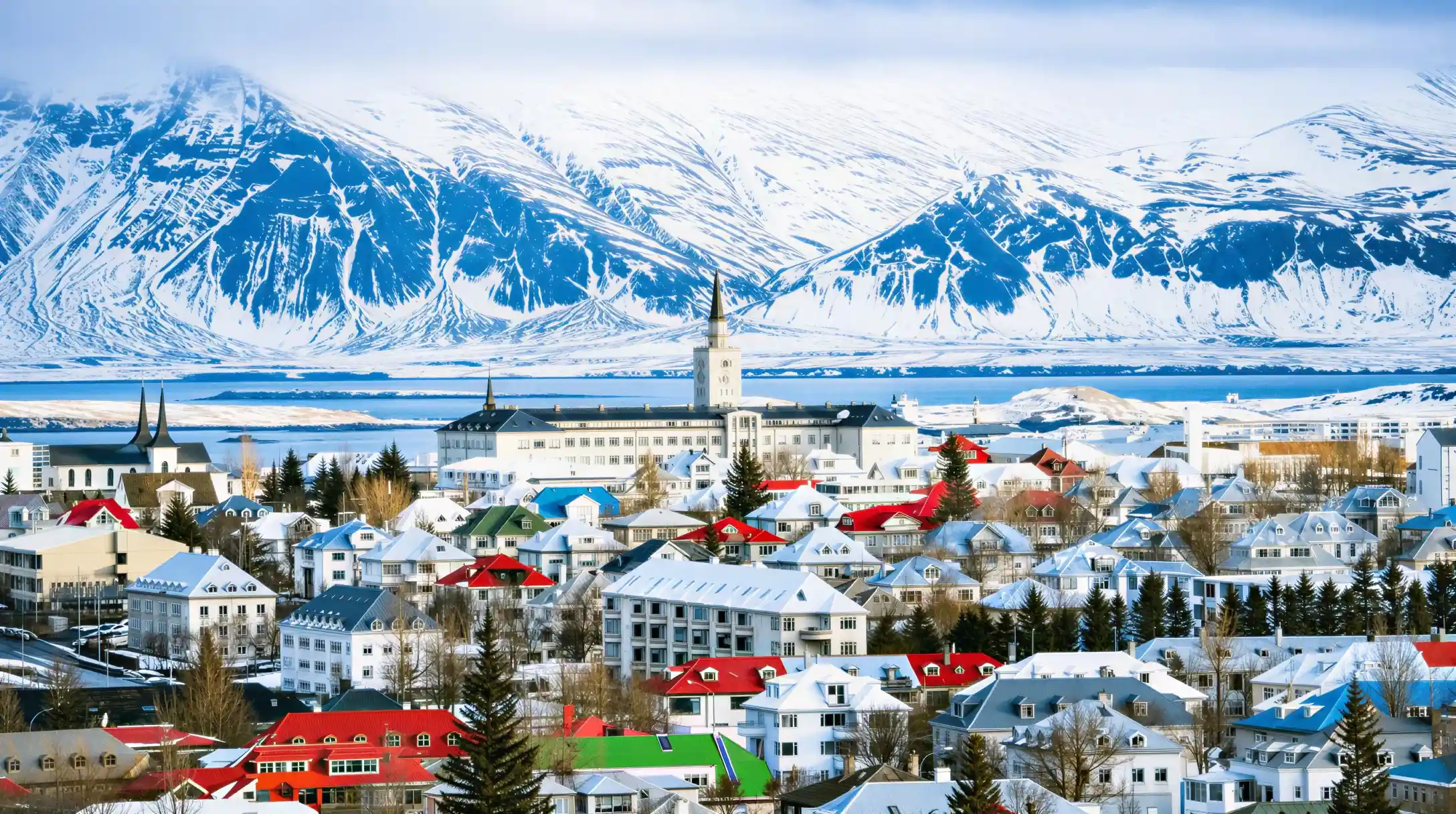
The city itself is smaller than its reputation. Reykjavik proper holds 139,804 people, and the greater capital region around it about 253,230, across roughly 244 km2 (94 sq mi). That scale matters for planning: distances inside the city are short, most tours depart from a handful of central pickup points, and a day trip out of town covers more empty road than town. Reykjavik was granted its city charter on 18 August 1786, and the parts of it that feel old are genuinely old, not styled to look that way.
The rest of this page works through when to come, how to get in from the airport, what a realistic budget looks like, and which tours are worth booking against that budget.
Compare the first tours to book
 Our pick
Reykjavik: Golden Circle Full-Day Tour with Kerid Crater
Þingvellir, Geysir and Gullfoss, plus the Kerið crater on a full day out of the city
A first day out of Reykjavik that covers the three best-known stops in one trip
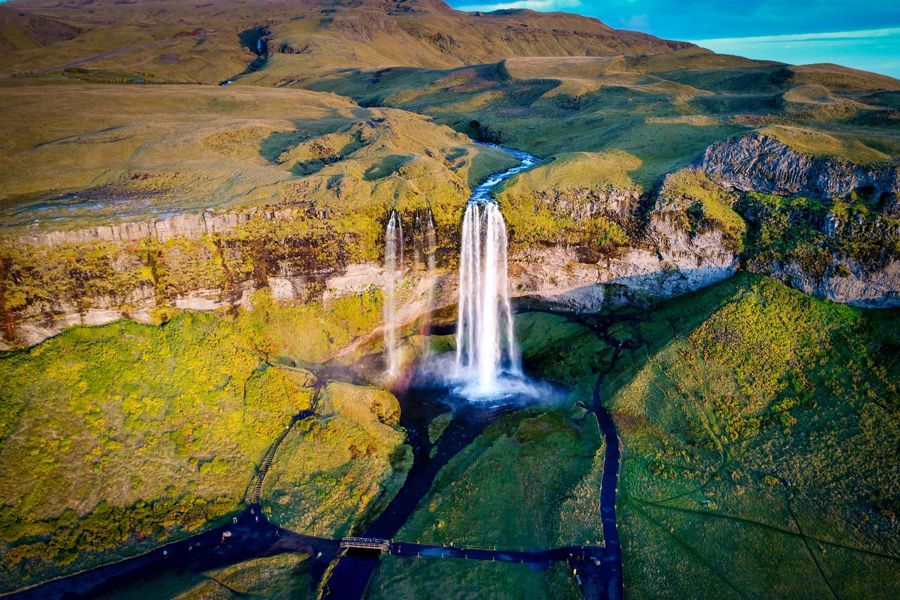
Reykjavik: South Coast Waterfalls, Black Sand & Glacier Tour
South coast waterfalls, a black sand beach and glacier scenery on a full day south of the city
Travellers with a second full day free and an interest in the coast rather than the inland circuit
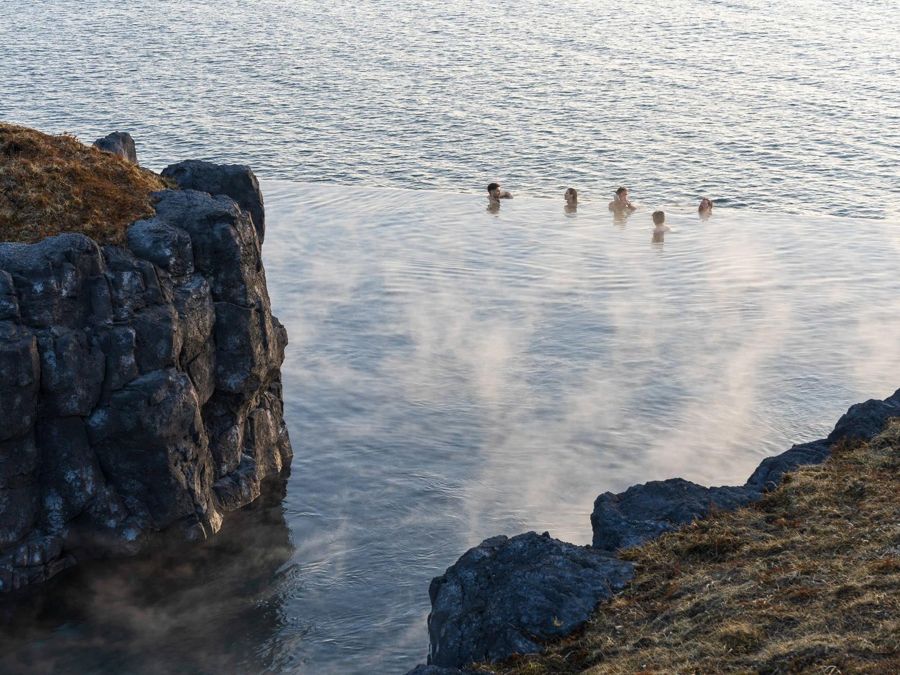
Reykjavik: Sky Lagoon Entrance Pass With 7-Step Spa Ritual
Entry to Sky Lagoon and its seven-step spa ritual
An evening or rest-day booking rather than a full tour day
What most planning advice gets backwards
Most planning advice for this city leads with sights and treats the calendar as an afterthought, when the calendar is what decides whether half those sights are worth the trip. A reykjavik travel guide written without dates attached to its claims is describing a version of Iceland that may not be available in the week booked.
Weather is the clearest example. Average highs run from about 3.2°C (38°F) in January to 14.9°C (59°F) in July, with lows from -1.9°C (28°F) in February to 9.1°C (48°F) in July. That is a narrower spread than most first-time visitors expect, and it means summer clothing plans built around a hot-country model do not fit. A waterproof layer earns its place in every season, including the ones with the higher averages.
Daylight swings far more than temperature does. The June solstice brings 21.2 hours of daylight, and the December solstice brings 4.1. A tour scheduled for late afternoon in December is scheduled for the dark, and a tour scheduled for late evening in June is scheduled for daylight that looks like mid-afternoon. Neither is a problem once expected, and both are a surprise otherwise.
The aurora season runs from late August to mid-April, bounded by the return of real darkness rather than by the aurora itself, a claim confirmed by the Icelandic Met Office. No tour, however well run, can produce a display in June: the sky is not dark enough for one to be visible, whatever the forecast says. Anyone planning a trip around the lights should treat the calendar as the first filter, before comparing operators or prices.
Getting the transport plan right
Anyone booking travel to Reykjavik iceland tends to treat the airport transfer as a formality to sort out later, and it is usually the first cost that surprises people once they see it. Keflavík Airport (KEF) is the main gateway, and the drive from there to downtown Reykjavik takes about 45 minutes by road. That distance is worth knowing before booking a hotel: the airport is not a suburb of the city, it is a separate town on its own peninsula.
Three ways to cover that stretch, at three different prices. The Flybus airport coach runs one-way from about 3,999 ISK. A taxi from Keflavík Airport to Reykjavik runs from about 22,500 ISK, which only makes sense split across a group or where the schedule does not fit a coach. Inside the city itself, a single Strætó bus fare runs from about 690 ISK, which covers most museum and pool visits without needing a car at all.
None of those figures are fixed forever, and each is worth checking again close to departure rather than trusted from an old listing. What does not change is the order of decisions: book the airport transfer before the in-city transport, because the first leg of the trip is the one most likely to be arranged for a group with limited flexibility on timing.
Renting a car changes this calculation, particularly for a Golden Circle or south coast day, but it also puts road conditions back on the traveller rather than an operator. Highland F-roads open on a schedule set by Vegagerdin each spring, and a route planned before that opening date is a route that needs a different plan.
Reading older advice against the current hazard picture
A reykjavik guide written more than a few months ago may still be describing an active eruption that has since ended. No eruption is active on Reykjanes at the time of writing. The most recent one ran from 16 July to 4 or 5 August 2025, the ninth eruption at Sundhnúkur since December 2023, and magma is still accumulating beneath Svartsengi. That status is dated and time-limited by nature, confirmed by the Met Office hazard assessment, and worth checking again close to any trip that includes the Reykjanes peninsula.
Grindavík and the Blue Lagoon remain open, behind lava barriers built around the town and around Svartsengi. Grindavík has crevasses from the recent activity, and visitors are told to keep to marked paths rather than explore the town freely. The Blue Lagoon itself has closed twice in the past two years, for nine days in February 2024 and for over two weeks from late November into December 2024, both times tied to nearby seismic activity.
Booking the Blue Lagoon needs a timed, pre-booked entry slot: a transfer ticket alone does not admit anyone, and summer slots can sell out days in advance. That single detail causes more missed bookings than any hazard on this list, because it is easy to assume a transfer includes entry when it does not.
None of this rules out a Reykjanes visit. It means checking the current status before finalising an itinerary that includes it, rather than relying on what a page said months earlier.
Why the season decides more than the itinerary
Deciding to visit Reykjavik around a fixed set of dates, rather than around what those dates make possible, is the single most common planning mistake on this trip. The same city reads completely differently in June and in December, and a plan built for one does not transfer cleanly to the other.
Puffins are present on the islands off the coast roughly from May to August, and outside that window no boat trip can show one, regardless of what a tour listing implies. Whale sailings run through the year but carry a strong summer skew, so a winter booking is a different wager than a July one. Natural ice caves are a winter product, running roughly from November to March, while the man-made Langjökull ice tunnel operates all year and should not be confused with the natural caves in marketing copy.
Reynisfjara's sneaker waves are documented by the authorities, with a warning-light system installed on site and dated fatalities on record. That is not a reason to skip the beach, but it is a reason to treat the posted warnings as instructions rather than suggestions, on any date of year.
For anyone choosing between a summer and a winter trip, the honest trade is this: summer brings long daylight, open highland roads and whale and puffin season, while winter brings the aurora season and the natural ice caves, and neither season delivers both halves of the list at once.
Planning around a realistic budget
A budget built only around flights and a hotel tends to undercount the trip, because Reykjavik iceland trips carry a second layer of costs in parking, entry fees and food that rarely show up in the headline price. Iceland's best-known free sights are no longer free to park at: Þingvellir and Geysir each charge about 1,000 ISK, Skógafoss charges about 1,000 ISK from a car park roughly 500 m (550 yd) from the falls, Seljalandsfoss charges about 900 ISK, and Sólheimajökull charges about 750 ISK. Gullfoss remains free to park at, which is worth factoring into a Golden Circle day.
Kerið crater charges a flat 700 ISK to walk in, with no reduced rate for children or seniors, and it publishes no fixed opening hours. Lagoon and spa prices sit in a different bracket entirely: Sky Lagoon's Saman pass runs from about 14,990 ISK and its Sér pass from about 17,990 ISK, both far above a standard city pool visit. Minimum ages are enforced rather than suggested: Sky Lagoon admits nobody under 12.
The comparison worth carrying through the whole trip is a city pool against a lagoon, since a standard pool visit runs to a few hundred ISK against several thousand for a premium lagoon experience, and both are legitimate ways to spend an afternoon depending on the budget. Iceland's reputation for cost is accurate, and it is more useful expressed as pairs of numbers like these than as a single adjective.
Reykjavik at a glance
| Population, city proper | 139,804 |
| Population, greater capital region | 253,230 |
| Average high, July | 14.9°C (59°F) |
| Average high, January | 3.2°C (38°F) |
| Daylight, June solstice | 21.2 h |
| Daylight, December solstice | 4.1 h |
| Airport to downtown drive time | 45 min |
- 139,804
- 253,230
- 14.9°C (59°F)
- 3.2°C (38°F)
- 21.2 h
- 4.1 h
- 45 min
What the forecast number actually means
A Kp number attached to a northern lights forecast gets treated as a promise more often than any other figure on this trip, and it is the one most likely to disappoint someone who has not seen how it is built. The Icelandic Met Office publishes an aurora forecast on a scale of 0 to 9, a measure of disturbance in the earth's magnetic field, laid over a separate cloud-cover map. The cloud map, not the Kp number, decides whether anything is visible on a given night.
A Kp of 2 under a clear sky beats a Kp of 5 under cloud cover, which is the reason tour operators sometimes drive well inland on one night and toward the coast on another: they are chasing the clear patch, not the number. A high Kp forecast printed without the cloud picture beside it is only half the information needed to plan an evening.
Seeing anything from within the city itself is possible on a strong, clear night, though it is not the typical case. Operators drive an hour or more out of town primarily to get away from streetlight glow, since the light pollution rather than the distance is what usually blocks a view from the centre.
Many tour operators offer a free rebooking if a tour does not produce a sighting, and this is a policy set by each operator rather than an industry-wide rule. It is worth confirming directly with whichever operator is booked, since the terms differ enough between companies that assuming one company's policy applies to another is a common and avoidable disappointment.
Packing for a city with four seasons in a week
Layered clothing works better here than a single seasonal wardrobe, because the temperature range across a single week can span what other cities see across months. A waterproof outer layer, a warm mid layer and sturdy waterproof footwear cover the great majority of days, including days that start clear and change within hours.
Wind matters more than the thermometer suggests on its own. A moderate temperature paired with a strong coastal wind feels considerably colder than the same number on a still day, which is part of why layering rather than a single heavy coat tends to work better here. Gloves and a hat earn their weight even in the warmer months, particularly for anyone heading out on a boat or up toward a waterfall spray zone.
Footwear deserves particular attention for anyone booking a glacier, waterfall or lava-field tour, since paths at these sites are frequently uneven, wet or icy depending on season, and city shoes are the wrong choice for any of them. Tour operators generally specify what footwear a given excursion requires, and it is worth checking that detail against what is actually packed before departure rather than after.
None of this needs an elaborate kit. A capsule of layers that can be added or removed through a single day handles the range this city produces better than a large suitcase of single-purpose clothing.
What entry rules actually require
Entry requirements are one of the few areas where a small, correctly sourced detail matters more than a long paragraph of general advice. Current entry rules and any restrictions are published by the US State Department for American travellers, and by the UK FCDO for British travellers, and the two occasionally differ on details like insurance recommendations or documentation, which is worth checking against both rather than assuming they align.
Both sources are updated on their own schedule rather than on a travel guide's publishing schedule, and neither should be treated as static once read. A rule confirmed months before departure is worth reconfirming closer to the trip, particularly for anyone connecting through a third country or travelling with a passport nearing its expiry date.
Travel insurance is worth arranging separately from any tour booking, and it is worth checking that a policy actually covers the specific activities planned, since glacier walks, ice cave tours and diving trips are treated differently by different insurers. This is a detail easy to overlook while comparing tour prices and easy to regret only once it is needed.
None of this is unusual advice for international travel generally. It is unusual only in how often it gets skipped in favour of sights and itineraries, when it is the layer that actually determines whether the rest of the trip can happen as planned.
- City bus fare (Strætó)
- from 690 ISK
- Airport coach, one-way (Flybus)
- from 3,999 ISK
- Taxi, airport to city
- from 22,500 ISK
- Kerið crater entry
- 700 ISK flat
- Sky Lagoon, Saman pass
- from 14,990 ISK
- Sky Lagoon, Sér pass
- from 17,990 ISK
Water that looks the same and is not
The two taps in a Reykjavik hotel room serve two entirely different sources, and it catches visitors off guard the first time. The cold tap runs glacial meltwater, clean and cold straight from the source. The hot tap runs geothermal water and carries a faint sulphur smell, which is completely normal and not a plumbing fault. Neither tap needs explaining to hotel staff, since it is universal across the city.
Tap water is safe to drink throughout, and buying bottled water is an unnecessary expense rather than a safety measure. A refillable bottle covers the entire trip, including on tours, where a stop is generally available if it runs low.
Tipping culture runs differently here than in the United States. Service is included in posted prices, and nobody expects a tip added on top, though bar staff and tour guides will accept one without issue if offered. The clearest exception is the free walking tour format, where guides work for tips by design and say so at the start of the tour, making a tip the actual payment rather than a bonus on top of one.
These are small details next to a hazard assessment or an entry rule, but they are the ones that come up daily rather than once, and getting them wrong costs nothing more than an unnecessary purchase or a moment of unnecessary awkwardness.
Aurora and daylight, by the numbers
- Aurora season
- late August to mid-April
- Daylight, June solstice
- 21.2 h
- Daylight, December solstice
- 4.1 h
- Aurora forecast scale
- Kp 0 to 9, overlaid on cloud cover
Choosing where to stay changes what a tour day looks like
A hotel booked purely on price, without checking distance from the main pickup points downtown, can add an early alarm and an extra taxi to every tour day booked. Most Golden Circle, south coast and Snæfellsnes tours collect passengers from a set list of central stops, and a hotel outside that radius often means a longer walk or a paid transfer just to reach the pickup point on time.
Staying centrally also shortens the walk back from an evening out, relevant in a city where winter darkness sets in by mid-afternoon and a well-lit central street feels considerably more comfortable than a longer walk through a quieter residential area. It is a minor consideration in June, when there is barely any darkness to walk through, and a real one in December.
Group size and pickup timing both affect how early a morning starts. A tour with an early departure time from a central point can mean a wake-up call well before the tour's stated start time once pickup stops around the city are factored in, and it is worth checking a tour's own pickup schedule rather than assuming the listed start time is the moment to be ready.
None of this changes what the trip costs overall by much, but it changes how much of each day is spent in transit rather than at the destination, which for a short trip is often the more limiting resource.
Reading a glacier's retreat as a fact, not a slogan
Glaciers retreating around Iceland is usually stated as a general claim, when in this location it is a measured one. Sólheimajökull's retreat has been recorded with dates attached to the measurements, tracking the glacier's edge moving back over recorded years rather than relying on a general impression from a single visit. Breiðamerkurjökull's retreat is what created the Jökulsárlón glacier lagoon within living memory, meaning the lagoon that draws so many visitors today did not exist in a recognisable form a few generations ago.
Neither fact needs dramatic framing to land. A guide walking a group across the glacier's current edge is standing somewhere that was under ice within living memory, and that is worth more than an adjective describing the scale of the change.
For anyone booking a glacier walk, this also affects what to expect underfoot: routes shift as the ice retreats and reshapes, and operators adjust their walking routes accordingly rather than following a fixed path year after year. A guide who mentions the route has changed since a previous season is describing a real, ongoing process rather than making conversation.
This is one of the few places on this trip where the visible evidence and the published measurement agree closely, which is part of why it is worth seeing directly rather than only reading about.
Putting the plan together
The order that works best for most first-time trips starts with the calendar, not the tour list. Fix the travel dates, check what that window actually makes possible against the aurora season, the puffin months and the highland road openings, and only then start comparing specific operators and prices against that fixed window.
Next comes the airport leg, booked early enough to lock in a coach seat or a taxi rather than arranging it after landing. Then the accommodation, chosen with pickup points in mind rather than price alone. Only after those three are settled does it make sense to compare Golden Circle operators against south coast operators against lagoon bookings, because by that point the budget and the schedule are both fixed enough to compare like against like.
Costs are worth tracking as a running total from the start rather than as a single guess at the end, since parking fees, lagoon entries and transport add up in ways that a flights-and-hotel estimate misses entirely. None of the individual costs on this page are large on their own. Together across a week they are a significant share of the total trip cost.
This page has covered the decisions that shape everything else. The tour pages, the day trip pages and the packages page linked above go further into the specific choices within each of those decisions.
Common questions
Is the Blue Lagoon open right now?
Yes, it operates behind lava barriers built around Svartsengi and the town of Grindavík. It has closed twice in the past two years for periods of one to three weeks during nearby seismic activity, so a booking close to the travel date is worth reconfirming.
Do I need to book the Blue Lagoon in advance?
Yes. Entry requires a pre-booked, timed slot, and a transfer ticket alone does not include admission. Summer slots can sell out several days ahead.
Will I see the northern lights in summer?
No. The aurora season runs from late August to mid-April, and June brings 21.2 hours of daylight, which leaves no dark sky for a display to be visible.
Is it safe to visit Reykjanes right now?
No eruption is active at the time of writing, though the situation is dated and can change, so it is worth checking the current hazard status shortly before travelling rather than relying on an older report.
How much should I budget beyond flights and hotel?
Parking at sights like Þingvellir, Geysir and Skógafoss now runs from about 700 to 1,000 ISK per stop, and a lagoon visit runs from about 15,000 ISK, so a multi-day itinerary can add a meaningful amount beyond the headline trip cost.